
What Is a Digital Twin? | Varadise
11-03-2026
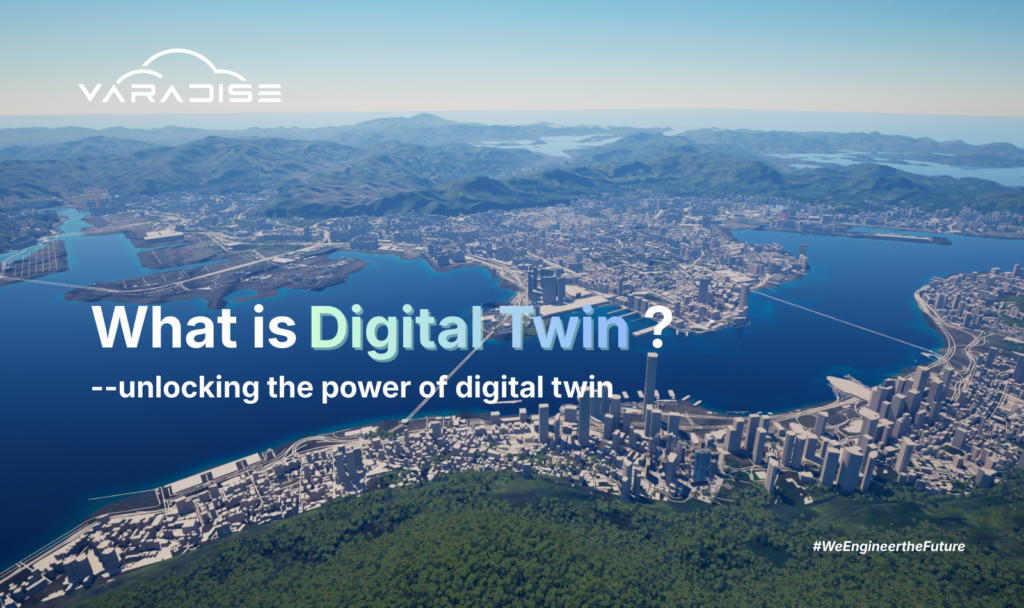
In today’s fast-paced, tech-driven world, digital twins are revolutionizing how industries design, build, and manage assets. At Varadise, we’re passionate about empowering businesses with cutting-edge digital twin solutions to boost efficiency, cut costs, and drive sustainability. Whether you’re in architecture, manufacturing, or infrastructure, understanding digital twins can transform your approach to innovation.
We’ll break down what digital twins are, how they work, why they matter, and why your business should embrace them. Plus, we’ll share practical use cases and insights to help you stay ahead in a data-driven future. Let’s dive in!
Unlocking the Power of Digital Twin
A digital twin is a dynamic, virtual replica of a physical object, system, or environment. Think of it as a real-time digital mirror that evolves with data from sensors, IoT devices, and building information models (BIM). From a factory machine to an entire smart city, digital twins provide a single source of truth for teams to monitor, analyse, and optimize assets.
At Varadise, we leverage platforms to create high-fidelity models that integrate real-time data, enabling smarter decision-making across industries.
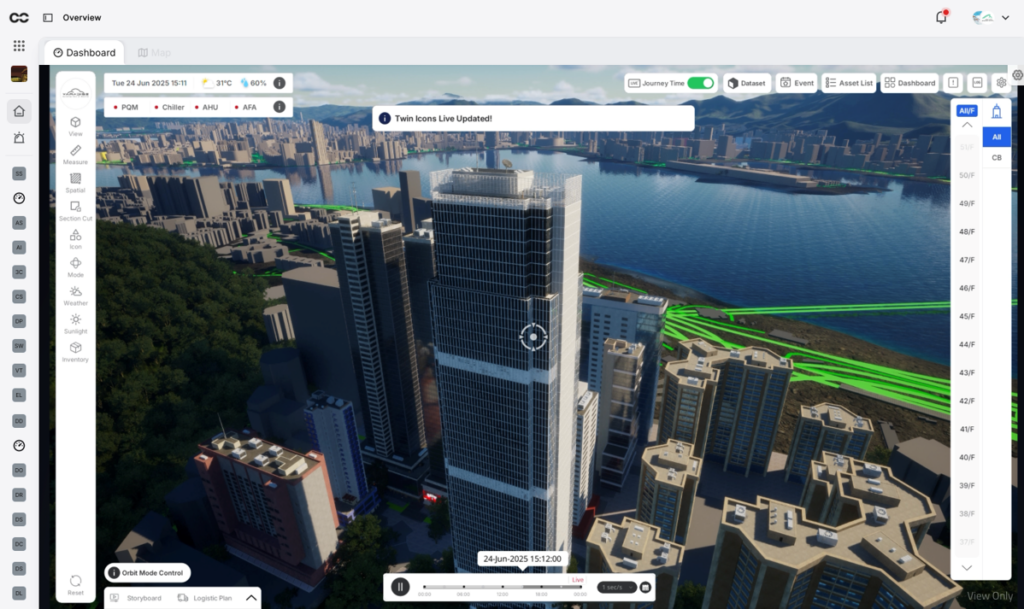
Key Components:
- Physical Asset: The real-world entity (e.g., a bridge, machine, or building).
- Virtual Model: A 3D or graphical representation built with advanced software.
- Data Flow: Continuous updates from IoT and AI for real-time insights.
How Do Digital Twins Work?
Digital twins bridge the physical and digital worlds through a seamless flow of data. Here’s how they come to life:
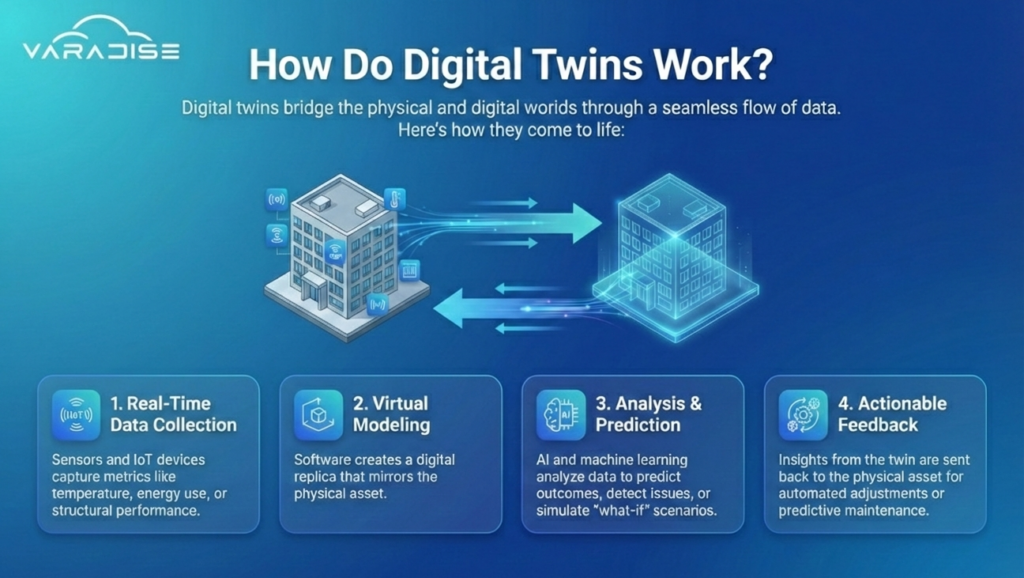
- Real-Time Data Collection: Sensors and IoT devices capture metrics like temperature, energy use, or structural performance.
- Virtual Modeling : Software creates a digital replica that mirrors the physical asset.
- Analysis & Prediction: AI and machine learning analyze data to predict outcomes, detect issues, or simulate “what-if” scenarios.
- Actionable Feedback: Insights from the twin are sent back to the physical asset for automated adjustments or predictive maintenance.
This bidirectional process ensures your digital twin stays accurate and adaptable. At Varadise, we integrate cloud-based systems to make this process scalable and collaborative, empowering teams to monitor assets remotely.
Why Are Digital Twins Important?
In an era of complex projects and sustainability goals, digital twins are a game-changer. Here’s why they’re critical:
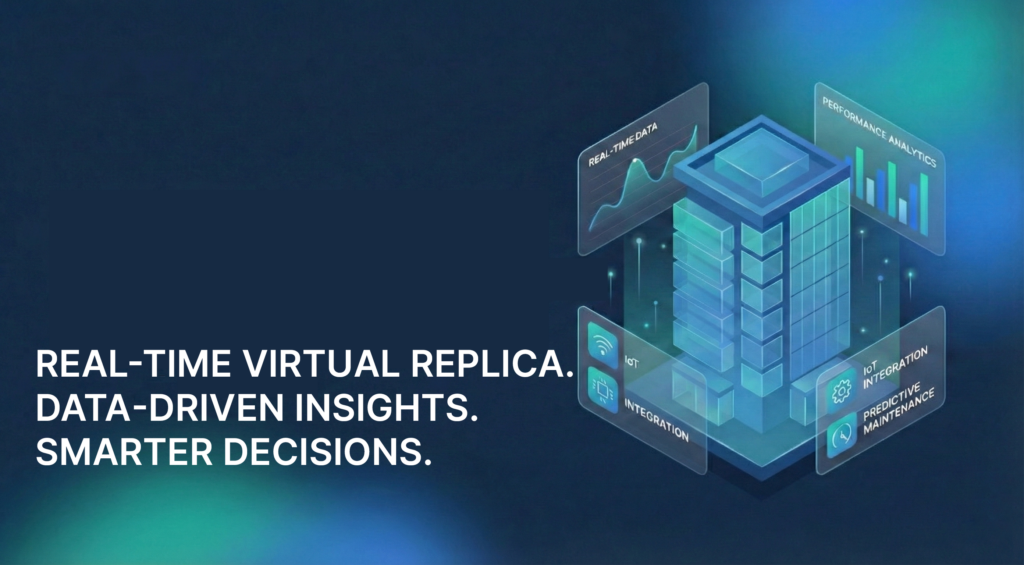
- Smarter Decisions: A unified data hub reduces errors and aligns teams across project phases.
- Sustainability: Optimize energy use and reduce carbon footprints, as seen in smart grids or flood-resilient infrastructure.
- Faster Innovation: Test designs virtually to accelerate prototyping without costly physical trials.
- Cost & Time Savings: Research from Stanford University shows digital twins can cut change orders by up to 40%, reduce operational costs by 9%, and speed up project delivery by 7%.
Without digital twins, businesses risk inefficiencies and missed opportunities. Varadise helps you harness this technology to stay competitive and future-ready.
Why Choose Digital Twins for Your Business?
Adopting digital twins isn’t just about keeping up—it’s about leading the way. Here’s why they’re a must for your business:
- Scalability: Seamlessly integrate with BIM, cloud platforms, or IoT systems, scaling from small products to city-wide projects.
- Competitive Advantage: Improve ROI, streamline workflows, and enhance collaboration across teams.
- Risk Reduction: Predictive analytics catch potential failures early, ensuring safety in critical sectors like healthcare or transportation.
At Varadise, we customize digital twin solutions using tools to align with your goals and global trends like smart cities and net-zero initiatives.
Industry Applications of Digital Twins
Digital twins are transforming industries:
- Manufacturing: Optimize supply chains, test parts, and automate processes for efficient factories.
- Architecture, Engineering & Construction (AEC): Build accurate 3D models, validate designs, and monitor buildings for sustainability.
- Energy & Utilities: Use tools to monitor dams or water networks for resilience.
- Beyond: From automotive prototyping to urban planning, digital twins drive innovation everywhere.
Key Benefits at a Glance
- Enhanced Collaboration: Real-time data sharing reduces delays and errors.
- Optimized Designs: Simulate scenarios for better, user-friendly outcomes.
- Operational Efficiency: Automate systems like HVAC or lighting for energy savings.
- Sustainability: Predict and minimize environmental impact.
- Data-Driven Insights: Tap into billions of IoT devices by 2030 for real-time analytics.
FAQs About Digital Twins
Q: Which industries benefit most? A: AEC, manufacturing, energy, and utilities lead the way, but applications span healthcare, automotive, and smart cities.
Q: How do digital twins work with IoT? A: IoT devices stream data to the twin, enabling real-time control and AI-driven insights.
Q: Are digital twins secure? A: Yes, with encryption and role-based access, though robust risk management is key.
Ready to Embrace Digital Twins?
Digital twins are more than a tool—they’re a window into smarter, more sustainable projects. At Varadise, we’re here to guide you through implementation, ensuring your business thrives in a data-driven world.
Connect with us to explore how digital twins can transform your operations. Let’s build the future together!
Contact Us
What are you looking for?
What are you looking for?
Tell us more about your needs
Ready to Transform the Future with Us?
Join us in shaping the future of construction. Discover how Varadise can elevate your operations today!

