
One Platform. Built for What Site Safety Asks Next.
28-07-2026
Construction safety technology in Hong Kong continues to evolve. When every new requirement can introduce another device, dashboard and follow-up process, contractors need more than additional hardware. They need a consistent way to connect safety signals, site action and records.
COSMOS provides that central platform layer. It helps project teams connect compatible safety technologies into established workflows, so alerts, analysis, assignment, verification and records can be handled within one site-management framework.
Varadise 4S – Smart Site Safety System is listed as a CITF pre-approved technology under PA24-113. According to the public CITF listing, it is a safety monitoring system that can serve as a Centralised Management Platform (CMP), combining imagery, video and IoT sensor inputs. Its stated scope includes dangerous-area detection for worker intrusion within mobile plant operation danger zones, and it is CMP-connectable. Actual deployment should always follow the project risk assessment and applicable requirements.
What is the Smart Site Safety System (4S)?
The Hong Kong Development Bureau promotes the Smart Site Safety System (4S/SSSS) for public works. It encompasses smart safety devices, a communication network and a centralised management platform. The Construction Industry Council also provides technology references and a labelling scheme to help the industry identify and adopt suitable technologies. Always refer to the latest official notice for applicable requirements and scope.
4S is not about accumulating standalone devices. Its value comes from making site signals visible, understandable, actionable and traceable.
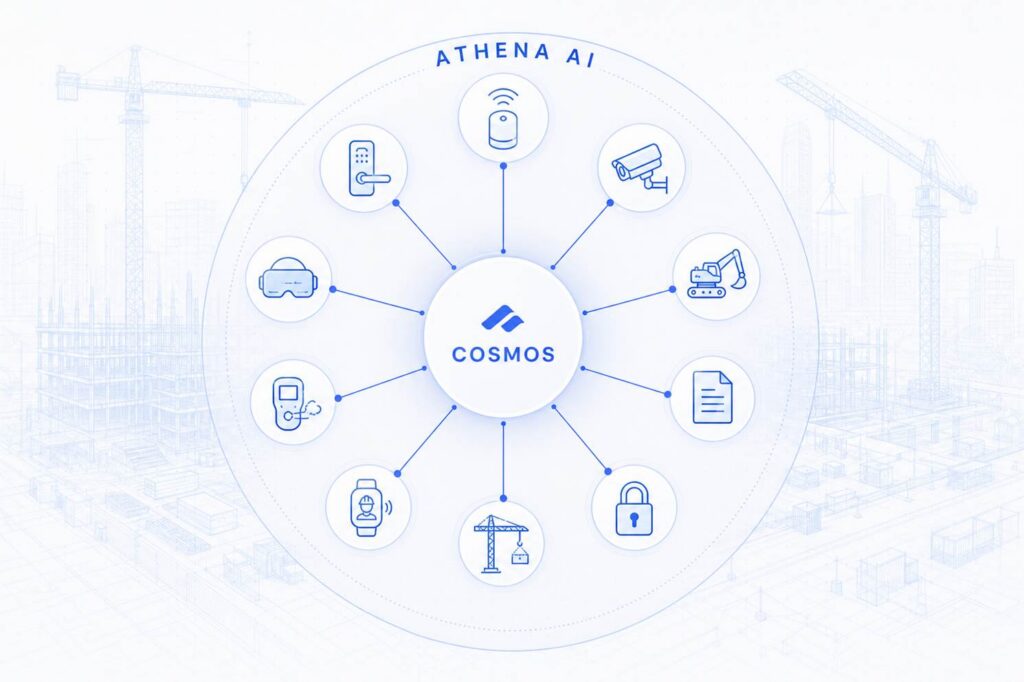
The 10 4S technology areas: from device to central management
The following are the 10 Smart Site Safety System technology areas listed in Construction Industry Council / CITF material:
| 4S technology area | Typical site function or device |
| 1. Centralised Management Platform | A management interface that consolidates safety-device signals, events, workflows and records. |
| 2. Digitised tracking system for site plants, power tools and ladders | Tags, location tracking and usage or inspection records. |
| 3. Digitised permit-to-work system for high-risk activities | Digital work permits, approvals and associated records. |
| 4. Hazardous areas access control by electronic lock and key system | Electronic locks, credentials and access management. |
| 5. Unsafe acts/dangerous situation alert for mobile plant operation danger zone | Proximity detection, location tags and alerting devices. |
| 6. Unsafe acts/dangerous situation alert for tower crane lifting zone | Lifting-zone monitoring, positioning and alerting devices. |
| 7. Smart monitoring devices for workers and frontline site personnel | Wearables, personnel location or health and safety monitoring devices. |
| 8. Safety Monitoring System using Artificial Intelligence | AI cameras, CCTV analytics and event recognition. |
| 9. Confined Space Monitoring System | Gas detectors, environmental sensors and alarm devices. |
| 10. Safety Training with Virtual Reality Technology | VR devices and immersive safety-training content. |
The names above are based on public technology listings. Product selection, deployment approach and project applicability should be determined by the relevant risk assessment and latest official guidance.
New safety needs should not fragment site management
As safety technology develops, sites may add solutions such as scaffolding sensors, smart protection for mobile elevating work platforms and intelligent fire and smoke detection systems. These devices can add valuable information across different work fronts and risk areas. But when each runs on an isolated platform, teams must move between interfaces and struggle to maintain consistent follow-up and records.
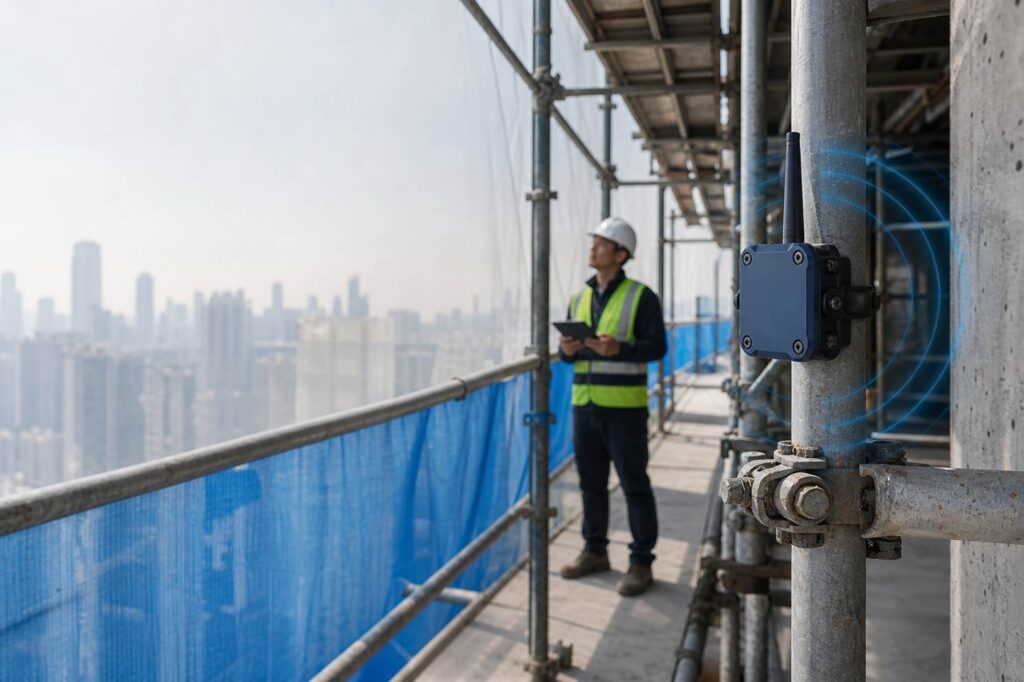
1. Scaffolding sensors: making changing conditions easier to review
Scaffolding environments change with programme, access and work activities. Compatible scaffolding sensors can provide additional site-condition signals for daily inspections and reviews. The real value is not a single reading, but how the signal is triaged, verified and documented.
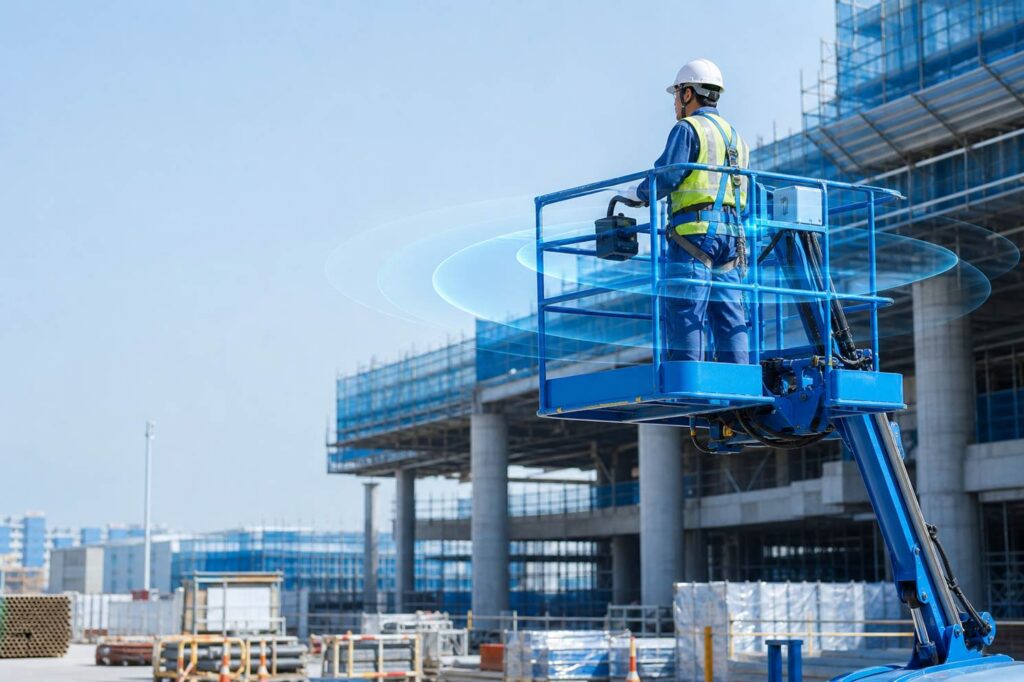
2. Smart protection for mobile elevating work platforms: connecting equipment and site control
Mobile elevating work platform operations depend on both the equipment and its surrounding conditions. Smart protection devices can provide useful signals and prompts. When compatible signals are brought into one management workflow, the team can review events, assign responsible parties and track follow-up consistently.
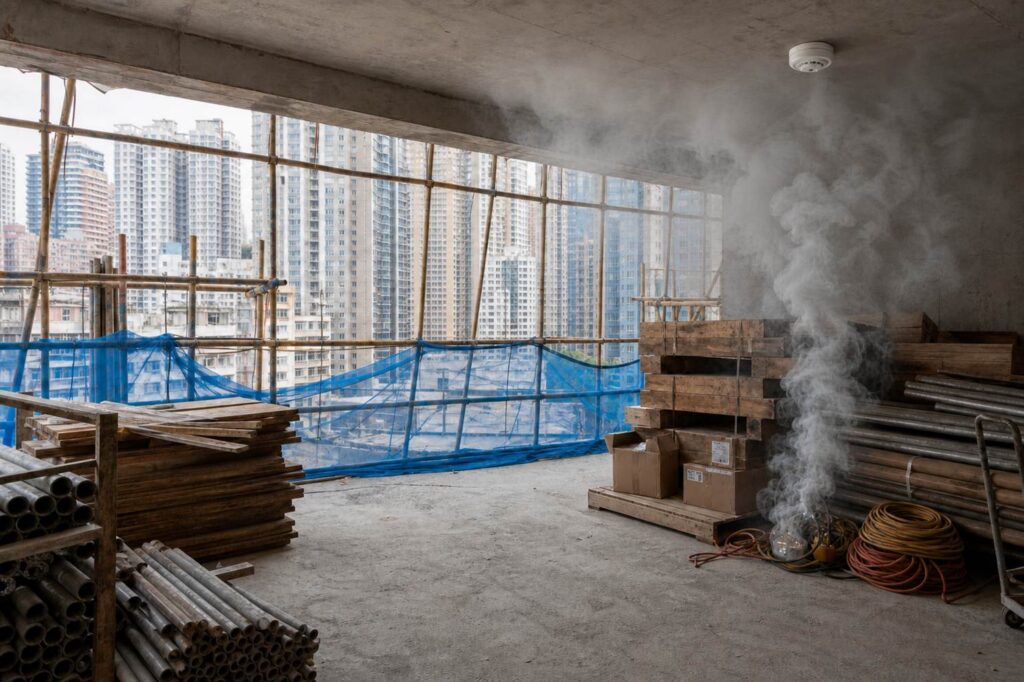
3. Intelligent fire and smoke detection: connecting alerts to traceable action
In unattended material-storage areas, temporary facilities or construction access routes, an early indication of smoke or heat needs more than a device alert. The project team must assess the situation, assign action, verify completion and retain the relevant records. That is where a central platform can help connect detection to the next steps.
COSMOS: turning safety signals into a manageable workflow
COSMOS does not treat site safety as a single device or one-off alert. It helps teams establish a connected management workflow:
- Receive signals — consolidate event information from compatible sensors, CCTV, access control and other safety technologies.
- Understand context — use location, time, recurrence and site records to help teams identify what needs attention.
- Assign and follow up — route required actions to the appropriate people and record progress in the same workflow.
- Verify and retain records — support closure verification, record retention and trend review for continual improvement.
This allows new safety devices to become part of the established site-management workflow rather than another information silo.
Standalone solutions versus one connected platform
| Management approach | What typically happens when a new device is added | Effect on the project team |
| Standalone solutions | Each device has its own supplier, dashboard, alert and report. | Information is fragmented, follow-up varies and cross-system tracing becomes more difficult. |
| COSMOS-centred platform approach | Compatible safety technologies connect into one site-management framework. | Signals, actions, verification and records can follow a more consistent process and extend to new needs. |
Build connection capacity for the next safety requirement
New safety requirements should extend your platform — not fragment it. With COSMOS as a central platform, project teams can assess compatibility and connect suitable safety technologies into established workflows, building a more complete and traceable view of site management over time.
Want to explore how COSMOS can support your 4S and site-safety management workflow? Contact the Varadise team.
Frequently asked questions
What is 4S, and why is it required in Hong Kong?
Smart Site Safety System (4S/SSSS) is the framework promoted by the Hong Kong Development Bureau for connecting smart safety devices, a communication network and a centralised management platform. For relevant public-works contracts, adoption requirements are set out in the applicable Development Bureau circular and contract conditions. The system supports technology-enabled safety management; it does not replace the project team’s safety-management responsibilities.
How does AI monitoring differ from traditional CCTV?
Traditional CCTV typically depends on people reviewing footage, often after an event. AI-assisted monitoring can analyse configured video feeds to surface defined site events or unsafe conditions for timely review and follow-up. Its effectiveness depends on camera coverage, site conditions, model configuration and human verification; it should support, not replace, professional judgement.
Does Varadise cover all 10 4S technology areas?
Varadise 4S – Smart Site Safety System is listed by CITF under PA24-113 as a safety monitoring system that can serve as a Centralised Management Platform. COSMOS can provide the platform layer for compatible technologies and workflows. Whether a project deploys all 10 technology areas — and the scope of each integration — depends on the project risk assessment, device compatibility and applicable requirements.
What operational benefits can a connected platform support beyond safety?
A connected platform can help teams bring together asset or equipment information, permit-to-work workflows, safety events and follow-up records. This can make coordination, traceability and trend review easier. Measurable gains and savings depend on the project, its baseline processes and the technologies deployed; they should be assessed on a project-by-project basis.
How is project data secured?
Data-security arrangements should be confirmed against the specific deployment, hosting model and project requirements. Varadise can discuss applicable access controls, audit needs and data-governance requirements during solution design. Do not rely on a generic security statement in place of project-specific security review.
Can COSMOS integrate with existing systems?
Integration should be assessed according to the existing system’s data interfaces, technical compatibility, available access and project requirements. A discovery phase can identify which safety devices, construction-management systems or other tools can be connected, and what implementation work is required.
Does adopting smart safety technology guarantee regulatory compliance?
No. Technology can support monitoring, documentation and follow-up, but compliance depends on actual site measures, management systems and applicable legal or contractual requirements. Teams should refer to current official guidance and professional advice.
References
- Development Bureau Technical Circular (Works) No. 3/2023: Smart Site Safety System — https://www.devb.gov.hk/filemanager/technicalcirculars/en/upload/1393/1/C-2023-03-01.pdf
- Construction Industry Council: 4S Labelling Scheme FAQ — https://www.cic.hk/content/4s-labelling/en/faq
- CITF: Pre-approved technologies for Smart Site Safety System — https://citf.cic.hk/Product_Photo/Images/PA%20List%20Products/20230615%20List%20of%20CITF%20Pre-approved%20Technologies%20%28Smart%20Site%20Safety%20System%20%28SSSS%29_v1.pdf
- CITF pre-approved product information: Varadise 4S – Smart Site Safety System (PA24-113) — https://citf.cic.hk/Product_Photo/files/PA_Technologies/PA24-113%20upload.pdf
Contact Us
What are you looking for?
What are you looking for?
Tell us more about your needs
Ready to Transform the Future with Us?
Join us in shaping the future of construction. Discover how Varadise can elevate your operations today!

